
Friendship Compatibility: What Makes a Friendship Score High
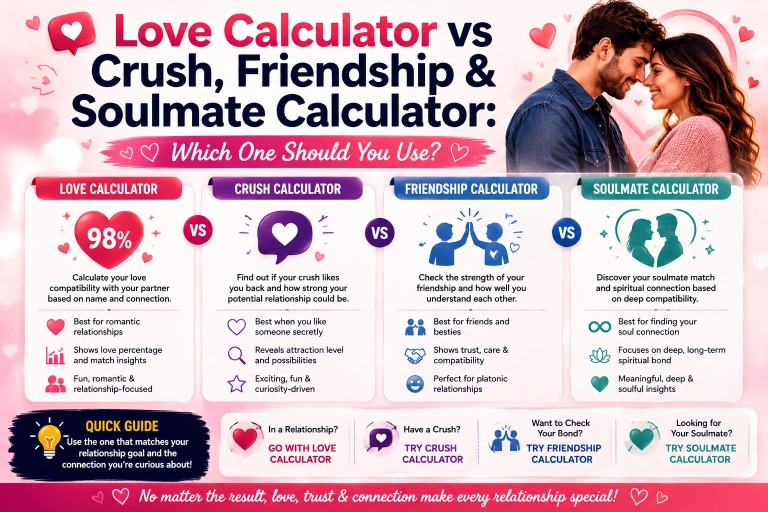
Short answer: A high friendship compatibility score comes from shared values, mutual trust, similar communication styles, and showing up consistently — not from having identical hobbies. Scores above 80% describe easy, low-drama friendships; 50–79% is a solid friendship with some friction to navigate; below 50% usually means the connection needs honest work or has run its course. Curious about yours? Try our friendship calculator.
What Makes a Friendship Score High
Researchers who study friendship keep landing on the same handful of ingredients:
- Shared values, not shared interests. You do not need the same hobbies — you need the same sense of what matters: honesty, loyalty, humor, ambition.
- Reciprocity. Both people initiate, both people listen, both people show up. One-sided effort is the fastest killer of friendship.
- Trust built in small moments. Keeping a confidence, remembering the hard week, texting back — reliability compounds.
- Compatible communication styles. Some friends process everything out loud; others need space first. Neither is wrong, but mismatched styles need translation.
- Repair after conflict. Every long friendship has a rough patch. The strong ones are not conflict-free — they are repair-rich.
What Your Score Means
80–100%: a natural, low-maintenance bond. You “get” each other with minimal explaining. Protect it — even great friendships fade without contact.
50–79%: the most common range for real friendships. There is genuine care here plus real differences. Name the friction points early instead of letting them calcify.
Below 50%: a signal, not a sentence. Sometimes it means growing apart, sometimes it means one difficult conversation could fix everything. Ask yourself: do I feel energized or drained after seeing this person?
How to Strengthen Any Friendship
Scores are snapshots, not destinies. Three habits move the needle more than anything else: initiate (do not wait to be invited), be specific (“how did the interview go?” beats “how are you?”), and show up for the unglamorous stuff — the move, the hospital waiting room, the Tuesday night vent. Grand gestures are memorable; consistency is what builds the score. And if you want a fun baseline to track over time, check in with our friendship calculator whenever the friendship hits a new chapter.